OUR HEALTHCARE PRACTICE CLIENT TESTIMONIALS
-

"After meeting Matt for the first time, he was able to diagnose the root cause of our financial struggles right away. He is extremely organized, knowledgeable, and most importantly, transparent. He walks you through every step of the way, breaks everything down and is confident in what he does. Matt's priority is to ensure that in the end we are successful, and we couldn't ask for more. I am so grateful for his guidance and looking forward for what's to come!"Sara Page, MBA
CFO & Business Manager
Pediatric Associates of Conn -

"Matthew is a pleasure to work with. He's very responsive, always gets back to me when he says he will, and has a very friendly personality. I always look forward to partnering with him."Ashley Sanderson
Senior Consultant: Pediatrics Division
Comp Health -

"We would like to take a moment to express our sincere appreciation for the outstanding work and support provided by Matthew Carreira in his role as our healthcare consultant. His contributions to our practice have been nothing short of exceptional. From the very beginning, Mr. Carreira has demonstrated a high level of professionalism, reliability, and consistency. He has been a steady and trusted resource, always responsive and proactive in addressing our needs."Cristiana Santos, MHA
Financial & Office Coordinator
SCWHCA -

"Matthew Carreira is the consummate professional, serious yet personable, skilled yet humble, unassuming yet assertive on behalf of those he represents. He’s a delight to work with, has a vast knowledge of healthcare business and private practice management, as well as a track record of nothing but success. I recommend Matt without reservation. I highly recommend him!"Alden Meade, JD
Ophthalmology Professor & Director
Yale School of Medicine
Healthcare Management & Operations FAQs
Common questions about optimizing medical practices in Connecticut.
How can I reduce operating costs for my medical practice in Connecticut without sacrificing patient care?
Reducing costs shouldn't mean cutting corners on care. In a high-cost state like Connecticut, the key is optimizing operational efficiency. I focus on renegotiating vendor contracts, eliminating administrative redundancies, and leveraging technology to automate manual tasks. By streamlining these "back-office" functions, we can significantly lower overhead while allowing your providers to focus entirely on patient outcomes.
What are the most common revenue cycle management (RCM) errors in CT healthcare organizations?
The most common errors I see involve outdated coding practices and slow denial management. Many CT healthcare organizations lose revenue simply because they don't have a robust system to track and appeal denied claims promptly. I implement rigorous RCM audits to ensure you are capturing every dollar you’ve earned, complying with the latest payer rules in the Northeast region.
How can a consultant help negotiate better payer contracts for medical groups in the Tri-State area?
Insurance payers often count on medical groups accepting standard fee schedules. With over 13 years of experience, I analyze your practice’s data to demonstrate your value—such as quality outcomes and patient volume—to leverage better reimbursement rates. Understanding the specific landscape of Tri-State area payers allows us to negotiate contracts that reflect the true cost of delivering care in this region.
Why is my medical practice losing money despite high patient volume?
High volume doesn't guarantee profit if your operational costs or revenue leakage are unchecked. It is often a symptom of "scaling inefficiencies"—where costs grow faster than revenue. I conduct a deep-dive financial analysis to identify if the issue lies in low reimbursement rates, staffing overages, or uncollected patient balances, and then build a roadmap to profitability.
What strategies work best for improving financial performance in pediatric groups?
Pediatrics relies heavily on volume and vaccine management. Drawing from Matthew's experience as COO of the Center for Pediatric Medicine, successful strategies include optimizing vaccine inventory costs, ensuring precise coding for well-visits vs. sick visits, and smoothing out scheduling density. We focus on maximizing the revenue per visit while maintaining a child-friendly environment.
How do I improve workflow efficiency in a multi-location medical group in Connecticut?
Managing multiple sites requires standardized processes. Whether your locations are in New Haven, Hartford, or Fairfield County, the patient and provider experience should be seamless. I help unify your EMR usage, scheduling protocols, and communication channels so that your practice operates as one cohesive unit rather than fragmented offices.
What are the current staffing challenges for healthcare administrators in New Haven and Hartford?
The local labor market is highly competitive. Retention is currently the biggest challenge. My approach involves not just recruitment, but creating sustainable staffing models that prevent burnout. By improving workflow and administrative support, we create a workplace culture that retains top talent from local hubs like Quinnipiac and Yale New Haven Health’s orbit.
How can we reduce patient wait times and improve satisfaction in our CT clinics?
Wait times are rarely a "doctor speed" problem; they are usually a "workflow" problem. I analyze the entire patient journey—from check-in to discharge—to identify bottlenecks. Often, simple changes to intake forms or rooming procedures can drastically reduce wait times, improving your reputation in the Connecticut community.
Does my practice need an operational audit to identify inefficiencies?
If you feel like your team is working harder but accomplishing less, an audit is essential. As an objective third party, I can spot inefficiencies that internal teams might overlook because "that’s how we’ve always done it." An operational audit provides a clear, data-driven action plan to modernize your practice.
What should I consider before acquiring a medical practice in Connecticut?
Due diligence is critical. Beyond the financials, you must assess cultural fit, patient retention rates, and potential compliance liabilities specific to Connecticut state regulations. Having successfully led acquisitions, such as with Child Care Associates in 2024, I guide you through the operational vetting process to ensure the investment is sound.
How do I prepare my medical group for a merger or acquisition in 2026?
Preparation is about "cleanliness" of data and operations. You need transparent financials, documented workflows, and a stable staff. I work with leadership to tidy up operational loose ends, making your organization more attractive to buyers or better prepared to integrate a new partner seamlessly.
What is the role of an interim CXO during a healthcare organization transition?
Transitions create gaps in leadership that can destabilize a team. As an interim CXO, I provide immediate stability and strategic direction. I step in to manage day-to-day operations, reassure staff, and keep strategic projects moving forward, ensuring that patient care never suffers during a leadership change.
How can I scale my private practice into a multi-provider group in CT?
Scaling requires moving from "founder-led" to "system-led" operations. I help you build the infrastructure—HR policies, management hierarchies, and scalable billing systems—that supports growth. My goal is to help you expand your footprint across Connecticut without breaking the operational foundation.
Ready to take your Healthcare Practice to Another Level?
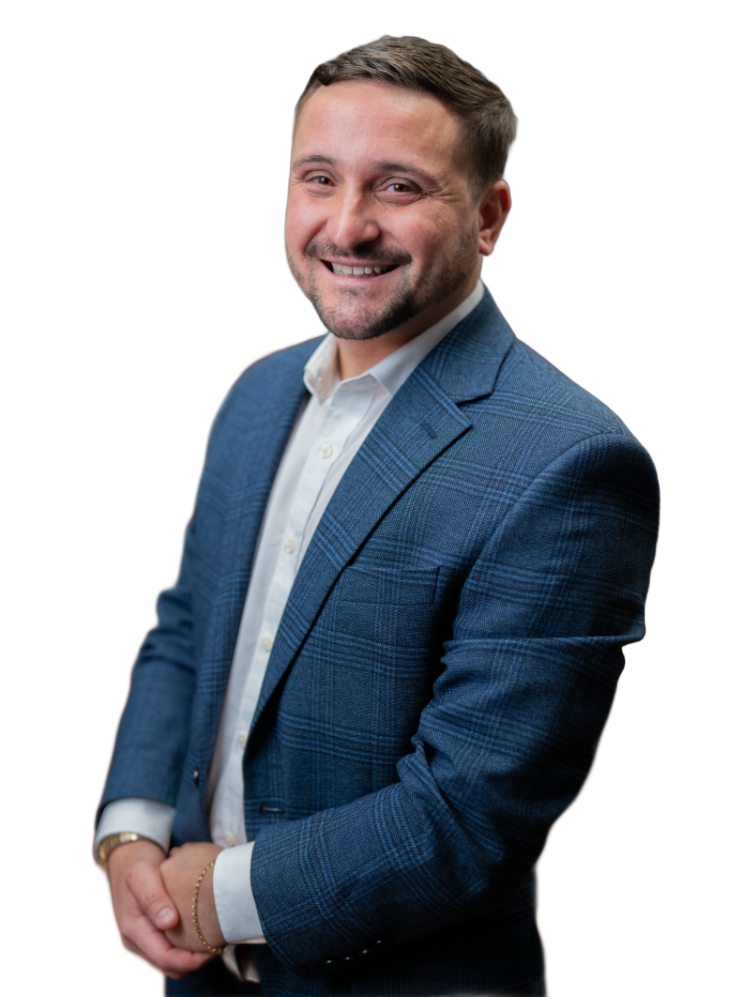
With over 13 years of experience in healthcare administration and management, Matthew specializes in helping medical organizations optimize operations, reduce costs, and improve financial performance. As former COO of the Center for Pediatric Medicine, he managed a multi-million-dollar pediatric group with 16 providers and 70+ employees across multiple locations. In 2024, he successfully led the acquisition of Child Care Associates.
Matthew identifies operational inefficiencies and implements strategic solutions across clinical, administrative, and financial areas. This includes enhancing workflow efficiency, revenue cycle management, staffing, compliance, and business growth.
He holds a Master of Science in Healthcare Administration from the University of New Haven and a Bachelor's degree in Health Science with a Business minor from Quinnipiac University.